

Read time: 5 minutes | This post challenges the common belief that a great product or service sells itself. Using the lens of perception design, hear why the best communicator always wins in today’s online marketplace and what that means for all businesses, including health and wellness practitioners, equestrian and ranch businesses, and product-based brands. Learn what the perception gap is, why it costs them, clients and customers they never see, and how to close it with intentional design and clear visual storytelling.
Your Reputation Is Real. Your Online Presence Should Match It.
The hardest part of this conversation is this.
Most business owners I work with are not struggling because their product is inferior or their service is lacking. They are struggling because their online presence does not reflect the quality of what they actually offer. They have built something genuinely excellent and the world does not know it yet because the digital version of their business is not telling that story.
That is not a marketing problem. That is a perception problem. And perception problems have design solutions.
Your Business Is Being Judged
Someone is looking you up right now. They acquired your name through a referral, a Google search, a social media post, or a directory listing. And within seconds, they will form an impression of your business that will determine whether they reach out or move on.
Mere seconds.
This is not an opinion. This is how the brain works. We are wired to make rapid assessments of credibility, safety, and quality based on what we see. Before logic kicks in, emotion and instinct have already decided.
For product-based businesses, this happens the moment someone lands on your product page. The photography, the layout, the font choices, the color palette, the way your brand feels at a glance. All of it is communicating something about the quality of what is inside the box before they ever read a description or check a price. A beautifully made product sitting inside a poorly designed online store will lose to a mediocre product inside a polished one. Every time.
For service-based businesses, the stakes are even higher. You are not selling something someone can hold or return. You are selling trust. And trust is built or broken in that first visual moment faster than any words can fix it.
The Perception Gap Nobody Talks About
Here is where it gets specific.
The perception gap is the distance between how good you actually are and how good you look online.
It shows up everywhere. The functional medicine doctor with seven years of experience whose website looks like it was built in 2017. The equestrian trainer with a barn full of champions whose homepage has no photos of the actual horses. The photographer with a stunning portfolio that doesn’t show up well on mobile. The copywriter whose own services are confusing and do not reflect the skill they bring to every client project. The trades business, the plumber, the contractor, the electrician, whose Google listing has five stars but whose website looks like a template nobody touched after the first draft.
Every single one of them is losing clients before the conversation ever starts.
The work is real. The results are real. The reputation is real. But a stranger finding you online for the first time has no context for any of that. They only have what they see. And what they see in the first seconds will either build instant trust or quietly send them to the next result.
This is especially true in the equestrian, ranch, and agricultural space, where businesses have historically underinvested in their digital presence. Training programs, breeding operations, western apparel brands, and boarding facilities. Built on decades of expertise and community trust. But when someone outside your immediate geography finds you cold, they have nothing to go on except how your website feels in that first moment.
For product-based brands, the gap is just as costly. A beautifully crafted saddle, a natural wellness supplement, a small-batch leather product with a real story behind it. If the online store does not communicate that quality immediately, the story never gets told. The product never gets its chance because the shopper has already left.
The Best Communicator Does Not Shout. They Clarify.
This is worth sitting with because a lot of people hear ‘best communicator’ and think it means the loudest voice, the biggest ad budget, or the most aggressive marketing strategy.
It does not mean any of those things.
The best communicator in your market is the one who makes it immediately clear who they are, who they serve, and why it matters.
They do not make the visitor work for it. They do not bury the most important information below the fold. They do not use their homepage as a dumping ground for every service they have ever offered or every product in their catalog.
For a product-based Shopify business, this looks like a homepage that leads with the transformation or experience the product creates, not just a list of features. It looks like product photography that communicates quality before the description is read. It looks like a checkout experience that feels as trustworthy as the product itself.
For a service-based business in health and wellness, equestrian, or ranch industries, this looks like a website that speaks directly to the person you most want to serve. It leads with their problem, not your credentials. It builds trust through visual consistency, clear messaging, and a brand that feels intentional rather than accidental.
“If You Build It, They Will Come.”
Okay, I do love this line from the Field of Dreams movie, but if you have a business, it is a terrible strategy.
You may have the best intentions, the best invention, or the best price. And yes, those are absolutely great benefits for your business plan; but your product will not sell itself. Your service will not sell itself. They never will. And the belief that they do is going to cost you.
If you have:
- spent years building out your product line
- provide B2B services, delivering a solution
- take photos of families, seniors, or weddings
- breed or train horses that go on to win
- change how people feel in their bodies through wellness
- have products or services that people love and recommend
… then you deserve an online presence that clearly communicates all of that on your website.
Because the best communicator always wins. And it is time for you to be a communicator.
Ready to Close the Gap?
Let’s make your online presence finally match your reputation. Here are two ways to work together.
Book a free 30-minute discovery call and let’s talk about what your website is currently communicating and what it could be doing differently.
Or if you are ready to launch something polished and strategic right now, browse the Curated Coastal Lounge template shop. Every template is built with the same intentional brand strategy and designed for several niche industries.
Still not sure what you should do next? Can’t decide which template is the best option for your type of business? No problem… Schedule a 30-minute call. No pressure, just a casual conversation.

I’m the designer behind Curated Coastal Lounge, a website design studio based in New Smyrna Beach, FL. I offers strategic Showit website templates and semi-custom website design services on the Showit and Shopify platforms.
I work with creatives and purpose-driven businesses, with a focus on health and wellness practices, equestrian businesses, ranches, and agricultural brands. If you are a business that is ready for a website that feels personal, looks polished, and is built to grow, schedule a call.
My clients come to me when they want more than a pretty website. They want something that translates their story through clear visual design and strong messaging into a site that earns trust, drives bookings, and converts the right buyers.
Schedule a Free Discovery Call: Casual, no obligation. I’m happy to brainstorm your options with you.

Leave a Reply
Read time: 9 minutes | A beautiful website is only effective when it clearly communicates your value, builds trust, and guides visitors toward the next step. I’m sharing the key areas I review, including messaging, visual hierarchy, navigation, mobile design, calls to action, brand consistency, trust signals, and technical performance. A website audit is one […]

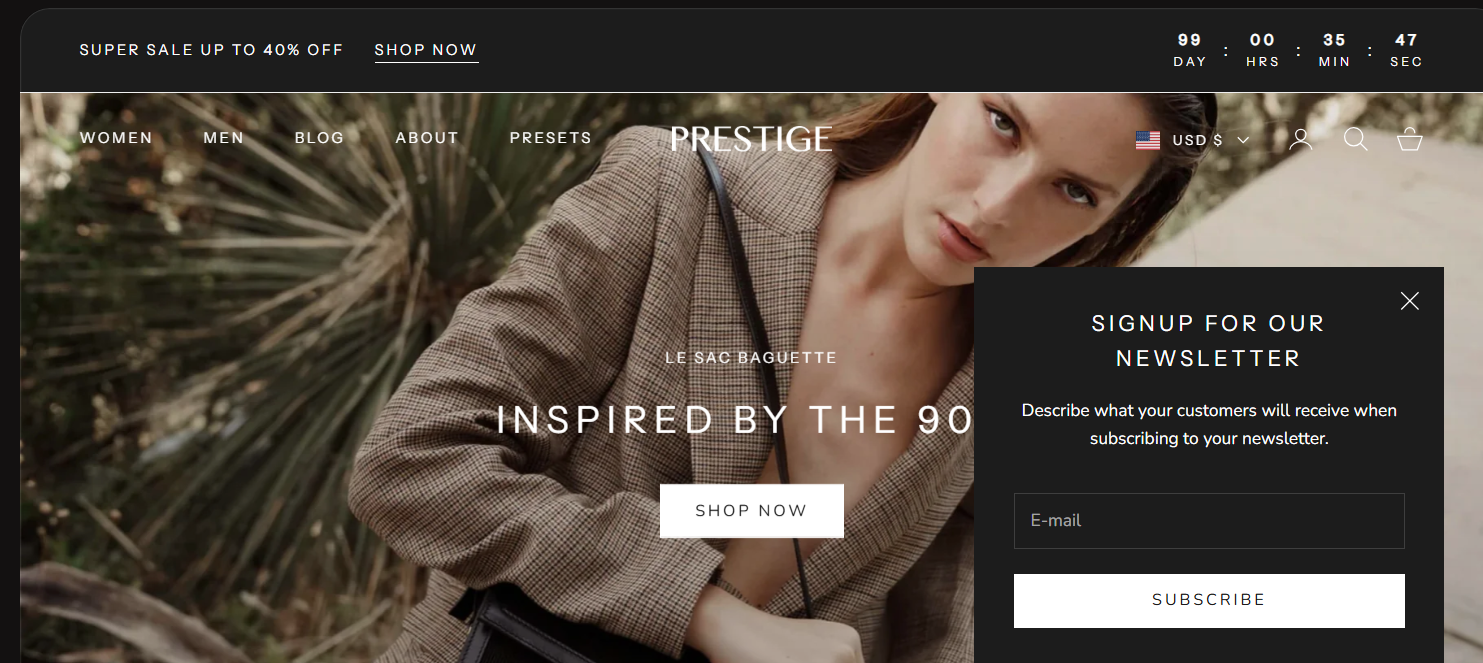
Read time: 11 minutes | If you’ve been exploring Shopify themes and Prestige has caught your attention, you’re looking at one of the platform’s most polished options. Created by Maestrooo and priced at $400, Prestige combines elegant design with powerful selling features, making it especially well-suited for premium and luxury brands. What Is the Prestige […]
Read time: 12 minutes | Starting with a free website theme is a smart choice for many new businesses, but what happens when your business begins to outgrow it? In this post, I’ll talk about free themes and premium website themes, look at a real before-and-after transformation, and walk through the signs that it may […]
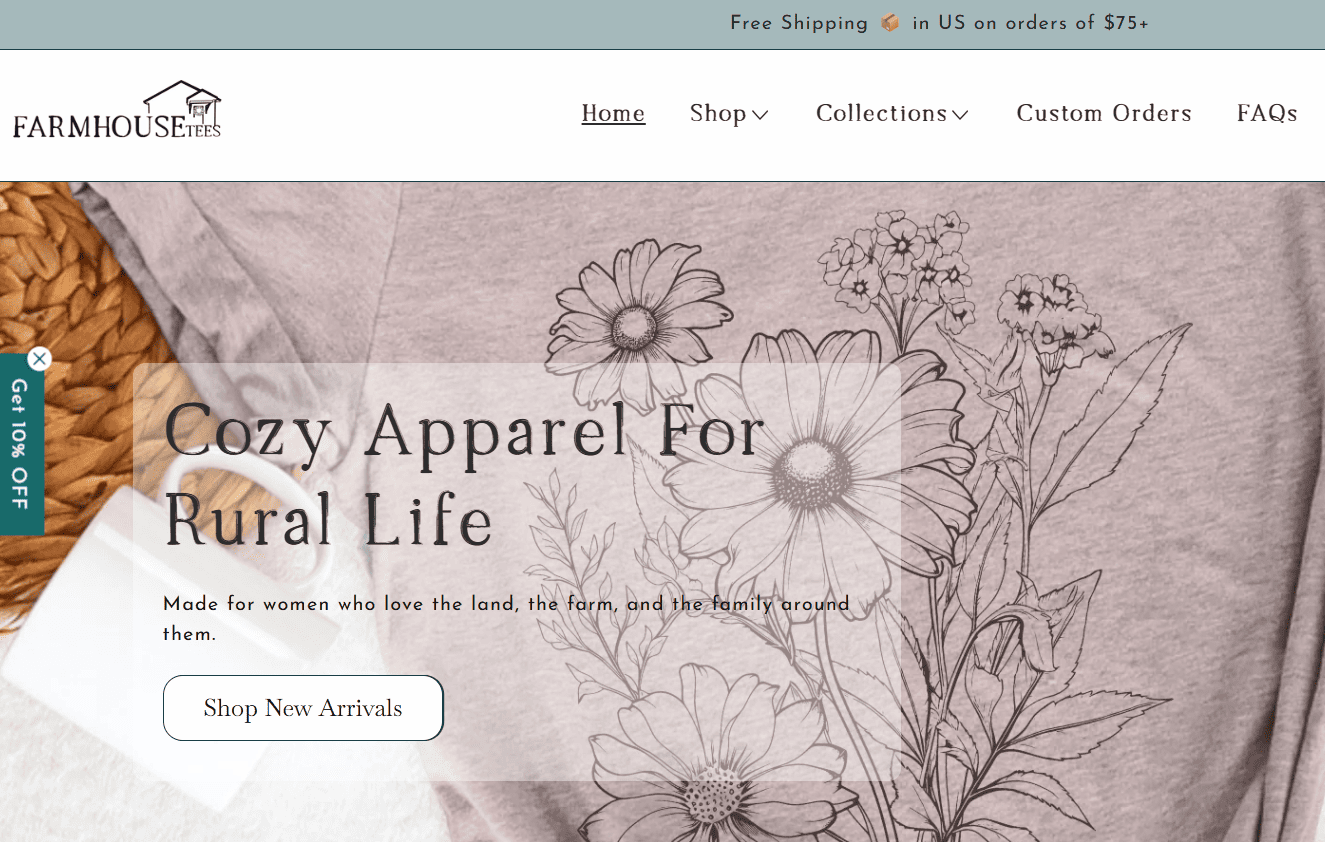
Read time: 12 min read | If you’ve been researching Shopify themes and landed on Eurus, you’re already looking in the right direction. Built by BSS Commerce and priced at $350, Eurus is one of the most feature-rich, conversion-focused themes on the Shopify Theme Store. One Theme, Two Personalities: Hue vs. Breeze This review focuses […]

Read Time: 5 minutes | This post makes the case for email marketing as a non-negotiable business tool for both e-commerce and service-based brands. Supporting data from the 2026 Omnisend e-commerce Marketing Report is woven in as evidence. The post also includes an email platform comparison and also speaks directly to service-based businesses. Email marketing […]
Read time: 7 minutes | Most businesses focus on what their website says. The more important question is what it communicates before anyone starts reading. Learn how the visual experience of your site shapes trust, credibility, and whether a potential client decides to stay or move on. Every Visual Choice on Your Website Sends a […]
Read time: 5 minutes | This post challenges the common belief that a great product or service sells itself. Using the lens of perception design, hear why the best communicator always wins in today’s online marketplace and what that means for all businesses, including health and wellness practitioners, equestrian and ranch businesses, and product-based brands. […]

Read time: 5 minutes | Professionally designed website templates are one of the smartest investments a small business owner can make. Start with a strong foundation that was built by someone who already figured out the layout, the flow, the placement of testimonials, and the calls to action that actually convert. Preview three niche Curated […]
Read time: 6 minutes | In wellness, your website actually affects how someone feels while they’re on your site. A breakdown of the five Showit website templates for health coaches, nutritionists, chiropractors, functional medicine providers, and holistic practitioners. What to Look for in a Health & Wellness Website Template Before diving into the templates, it’s […]

You may also like...
Disclosure: This page may contain affiliate links and I may receive a small commissions from purchases made through links at no additional cost to you. I only recommend products I would use myself and all opinions expressed here are our own.


